Guide to Monopod Guitar Support Installation
Result
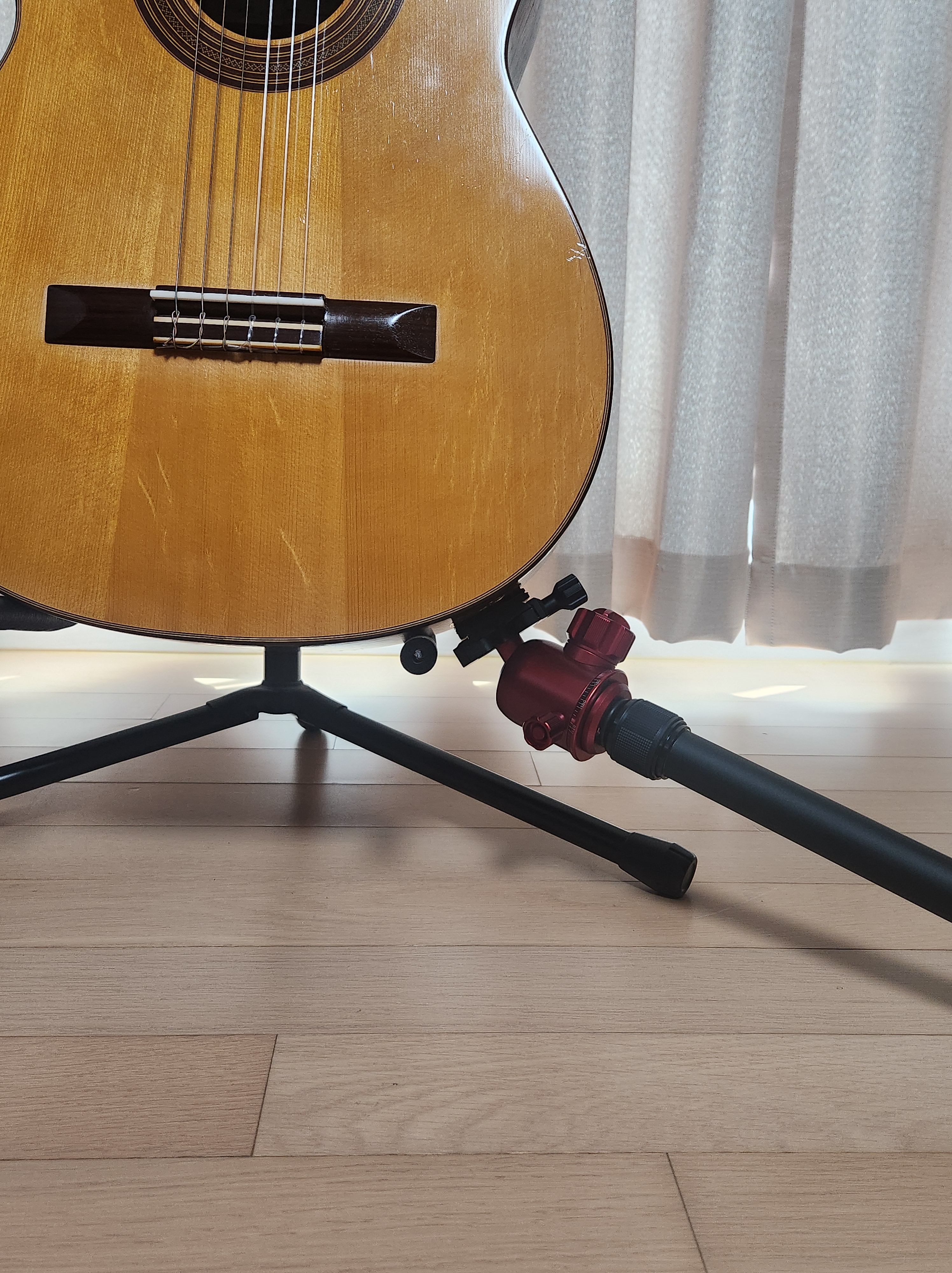
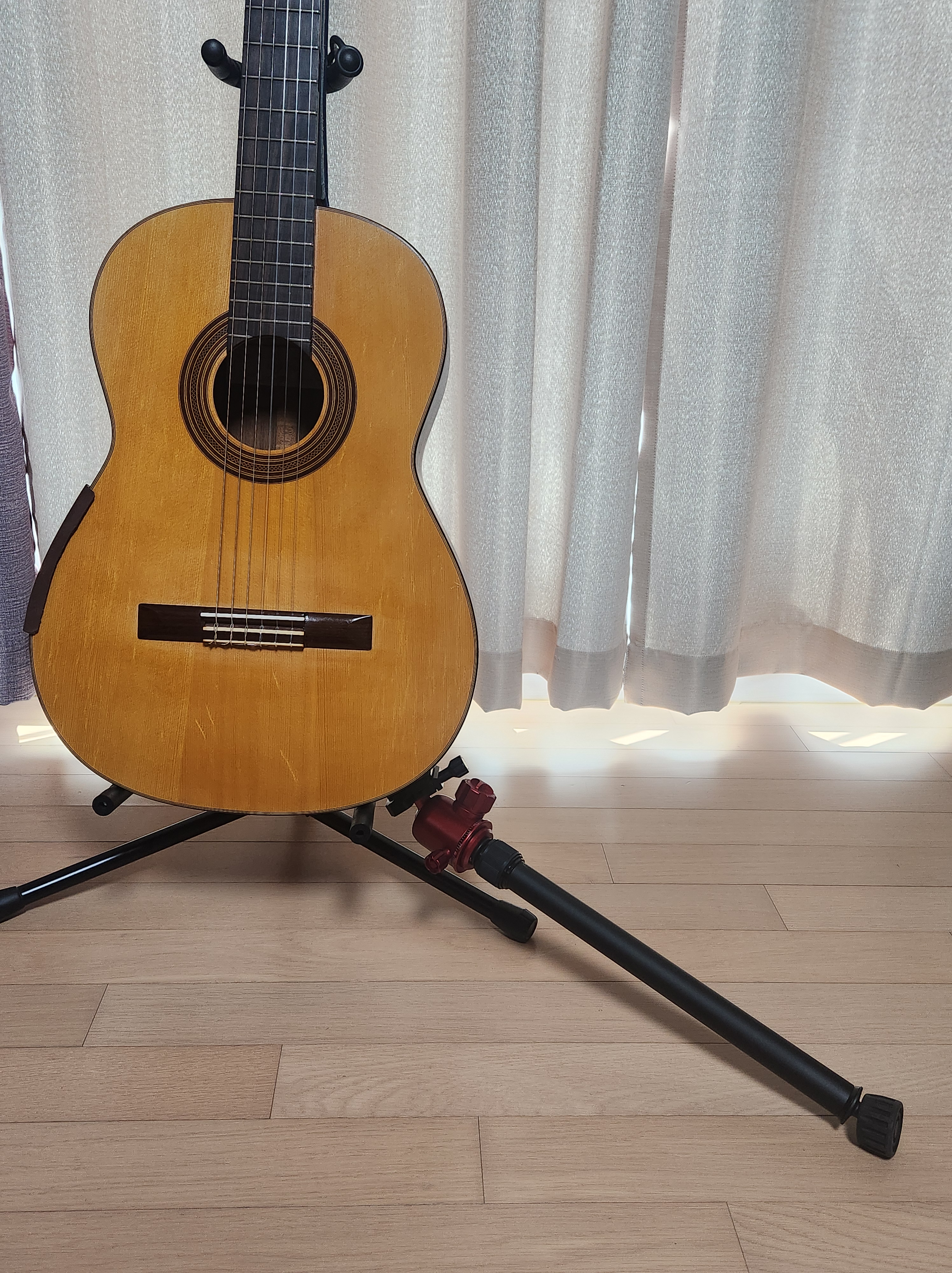
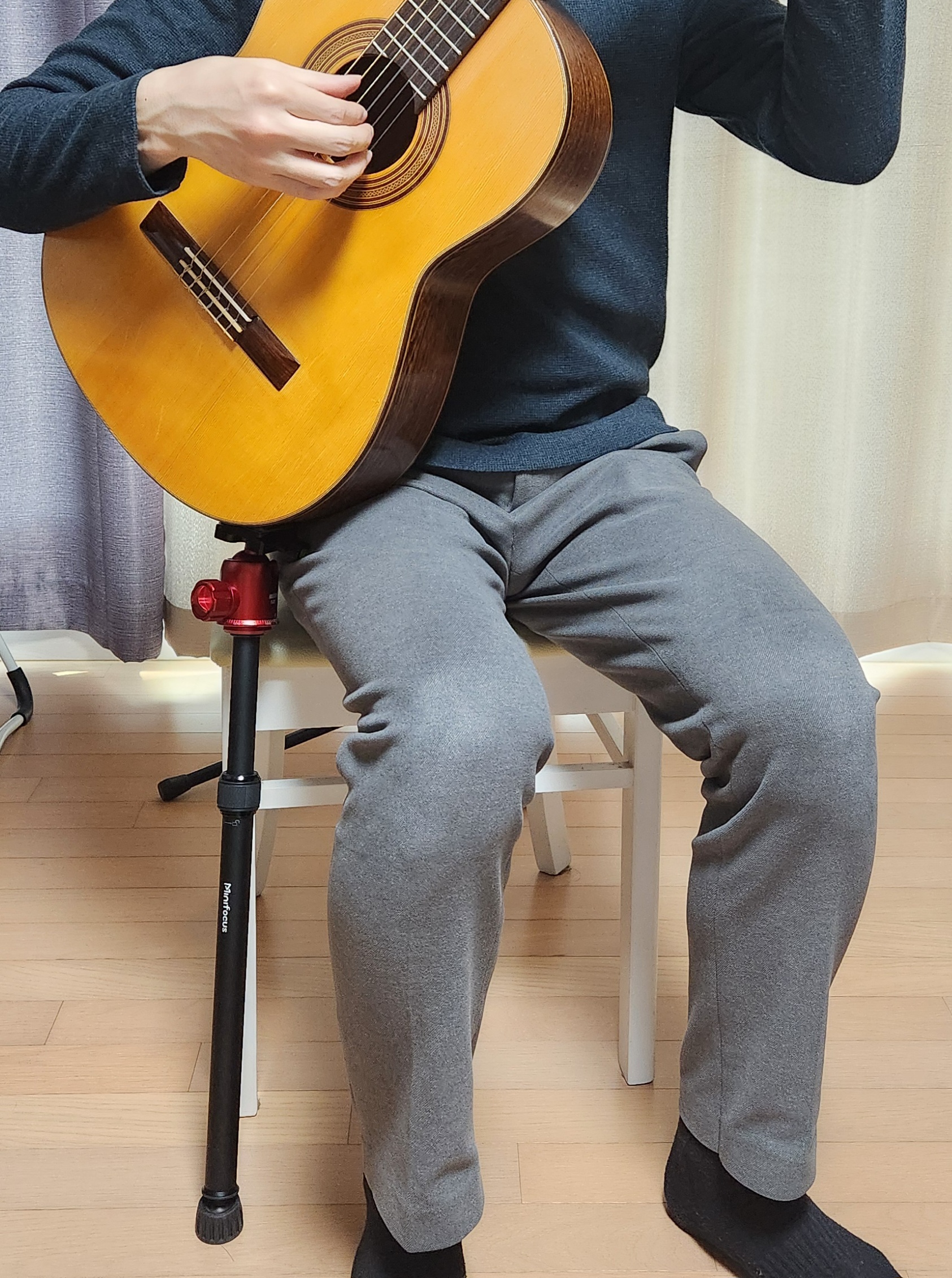
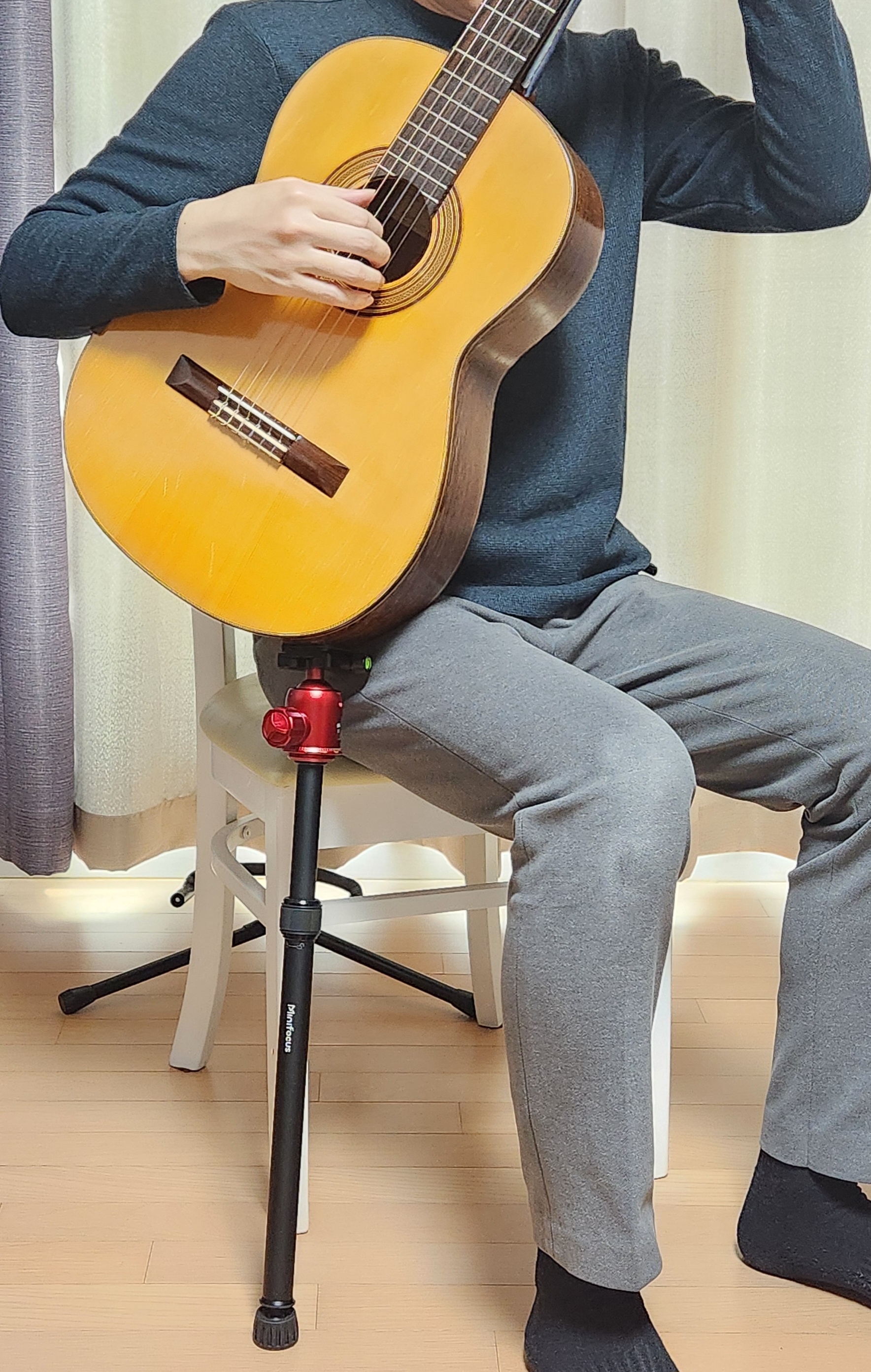
Materials
- Nano silicone double-sided tape (hereafter “nano tape”)
- VHB double-sided tape
- Leather
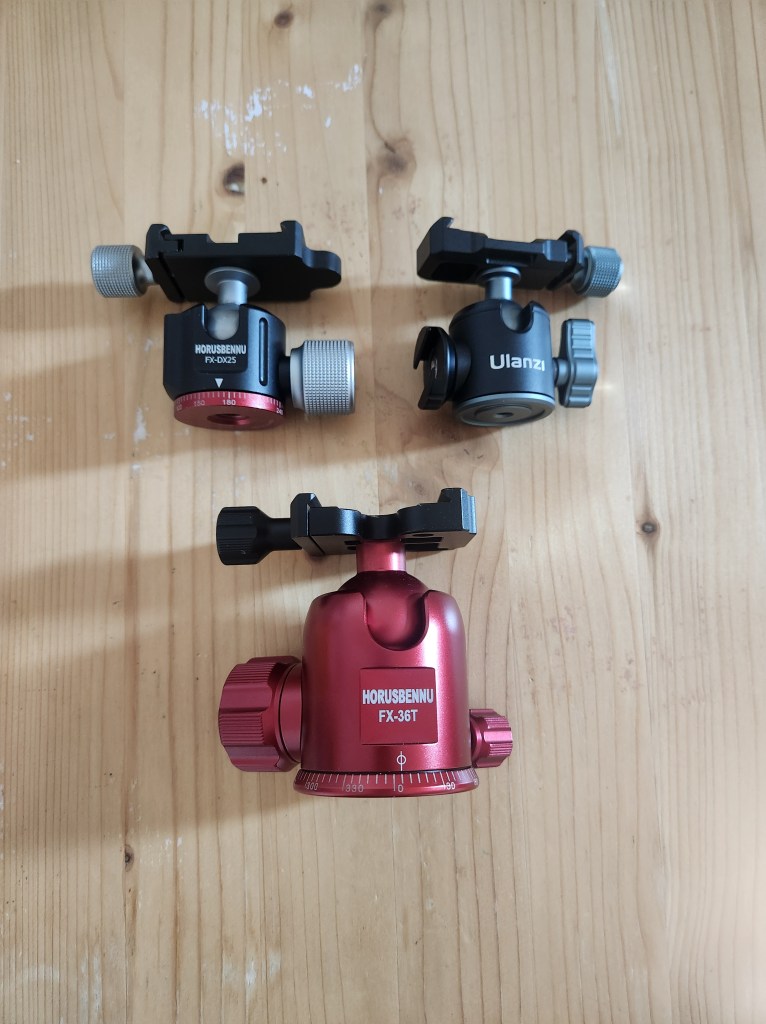
- Arca (Arca-Swiss standard) ball head
- Portable: Maximum load 20 kg or more
- Stationary: Recommended maximum load 30 kg or more
- Installed at the waist of a classical guitar: Maximum load 10 kg or more
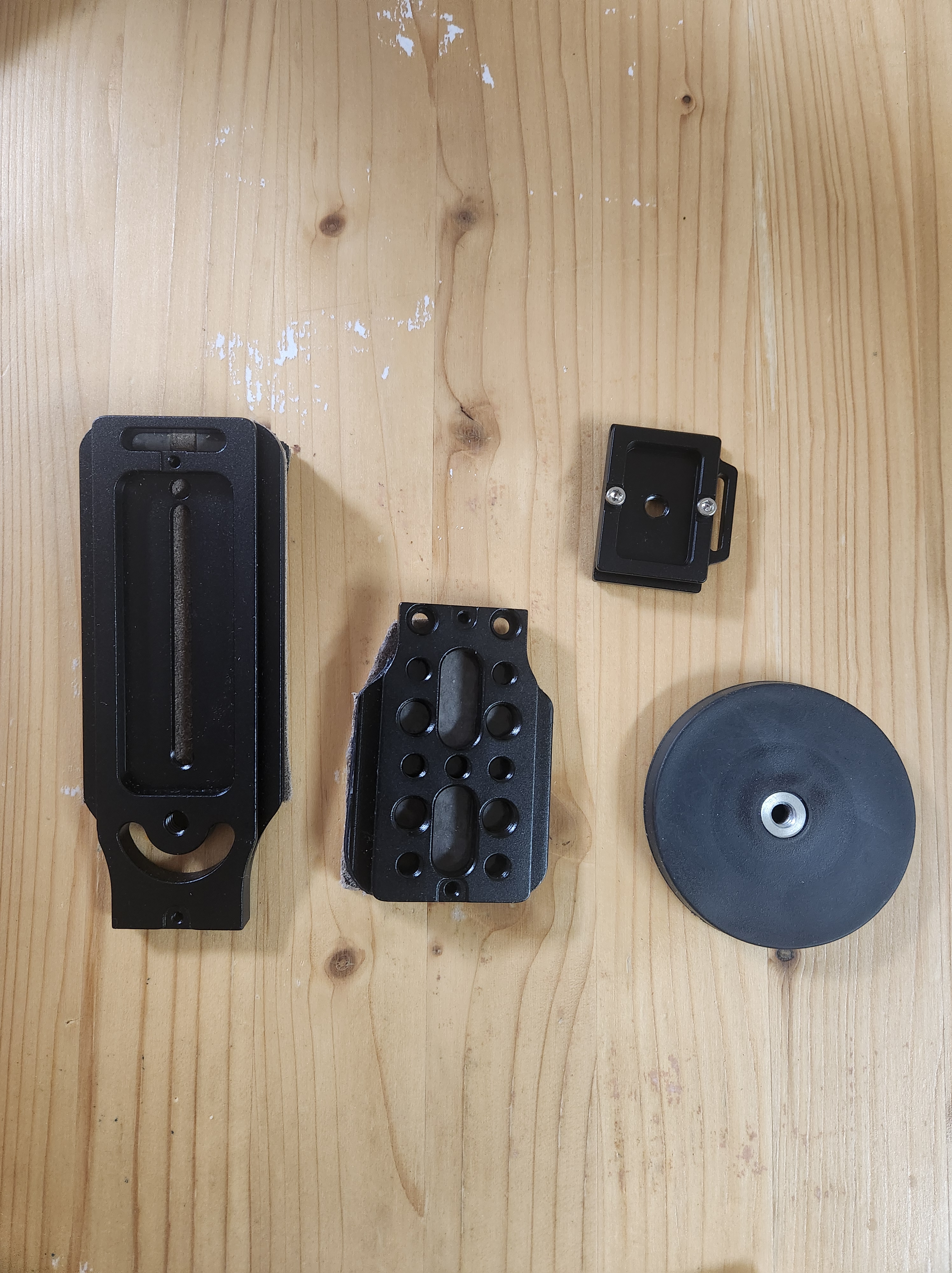
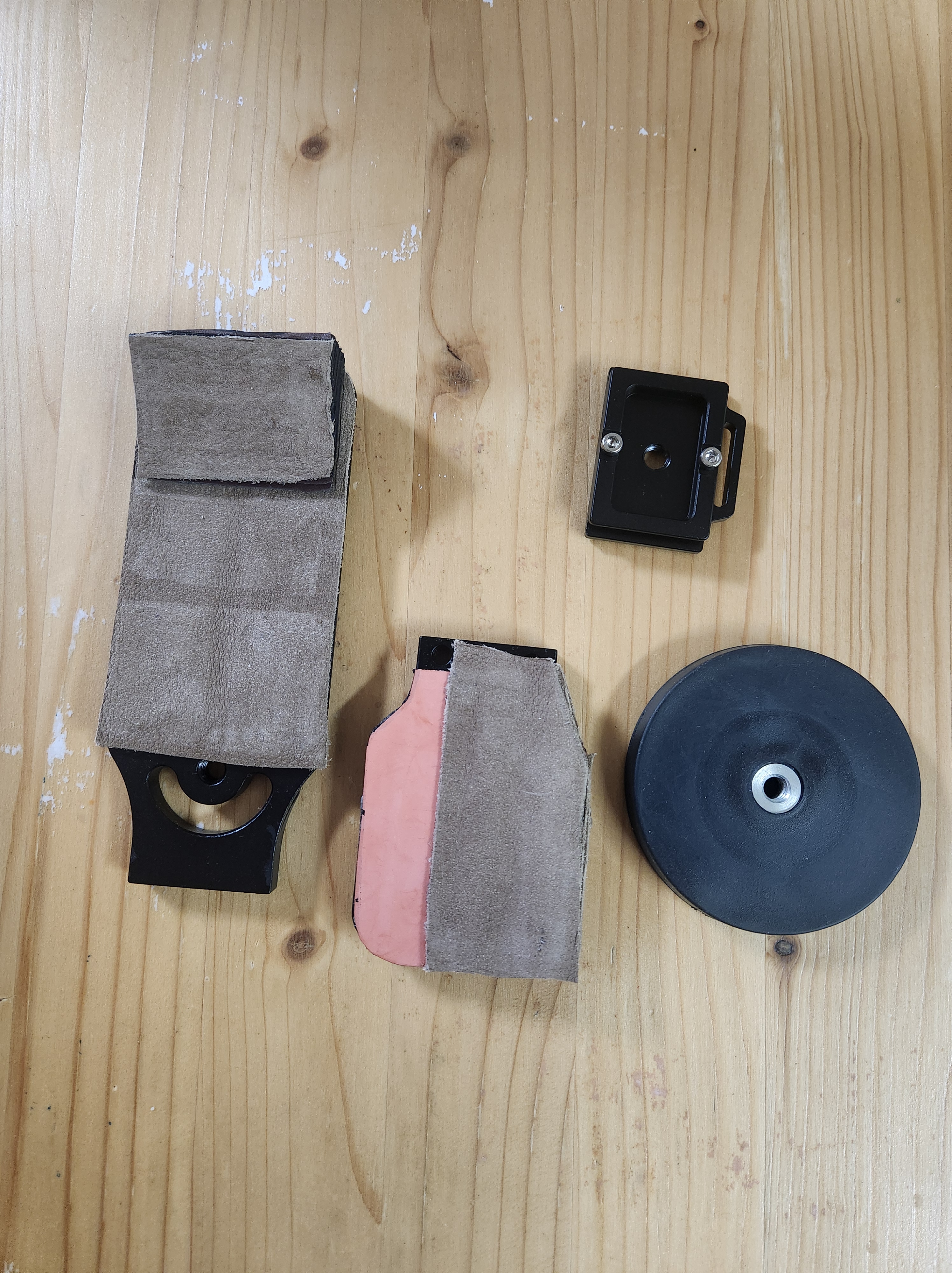
- Arca (Arca-Swiss standard) plate
- Appropriate size (minimum recommended: 5 cm × 6 cm)
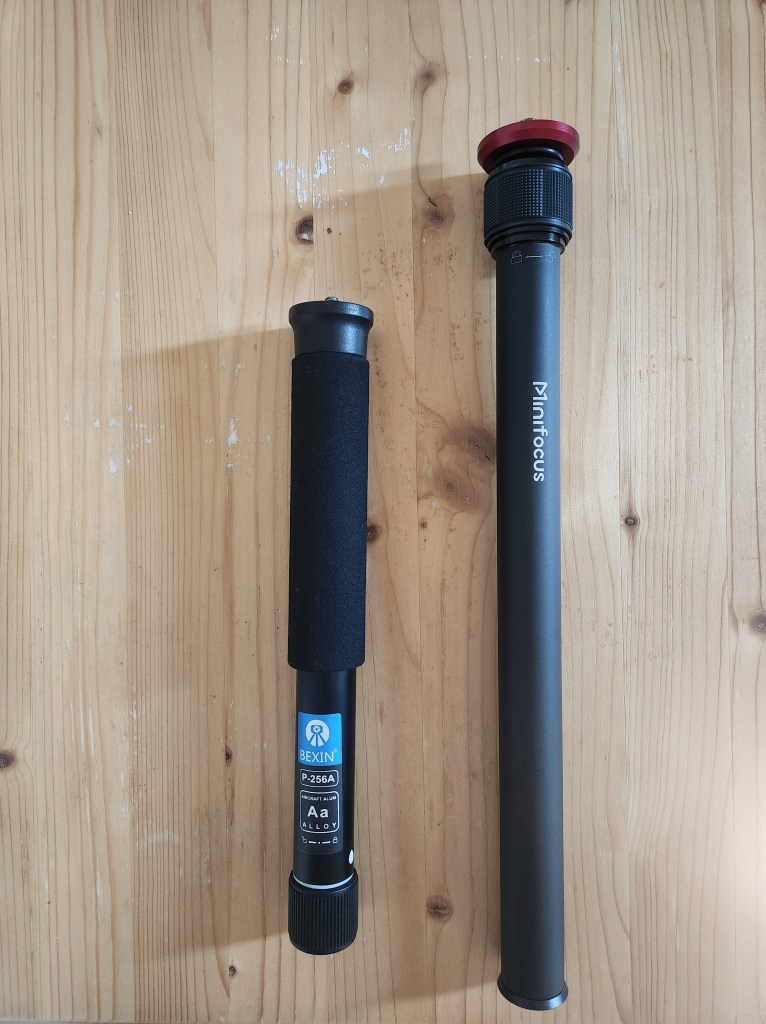
- Lightweight monopod
- Installed at the bottom of a classical guitar: 2-section extension is sufficient, recommended max load capacity 10 kg or more
- Installed at the waist of a classical guitar: depends on required height, recommended max load capacity 5 kg or more
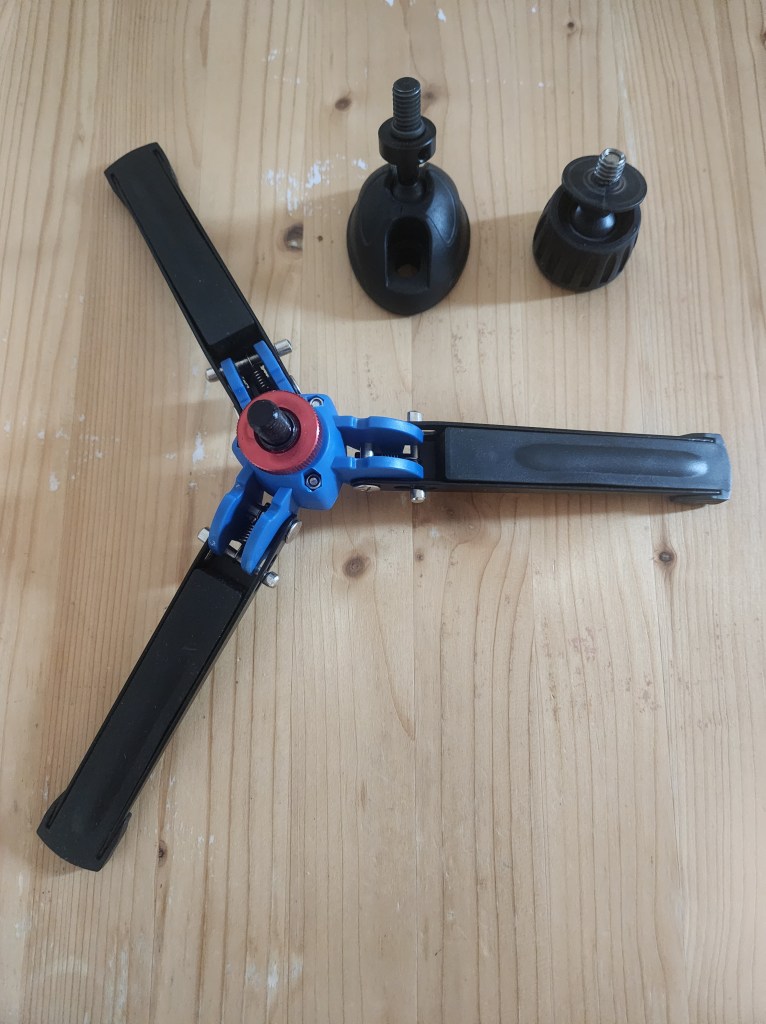
- Monopod foot pad / base
- Recommended: types that can rotate and move freely (various versions exist, including tripod bases)
Installation Method
(1) Choosing the plate position
The plate can be attached anywhere, but it is recommended to start at a point about 45 degrees toward the lower bout (bottom side) from the bridge of the classical guitar.
Hold the neck with your left hand and position the guitar at a comfortable playing angle. Then support the intended plate position with your right hand to find the balance point.
Since a ball head is used, perfect precision is not required. However, it is recommended to test first using a small amount of nano tape so that it can be easily removed.
(2) Matching the plate to the guitar body curvature
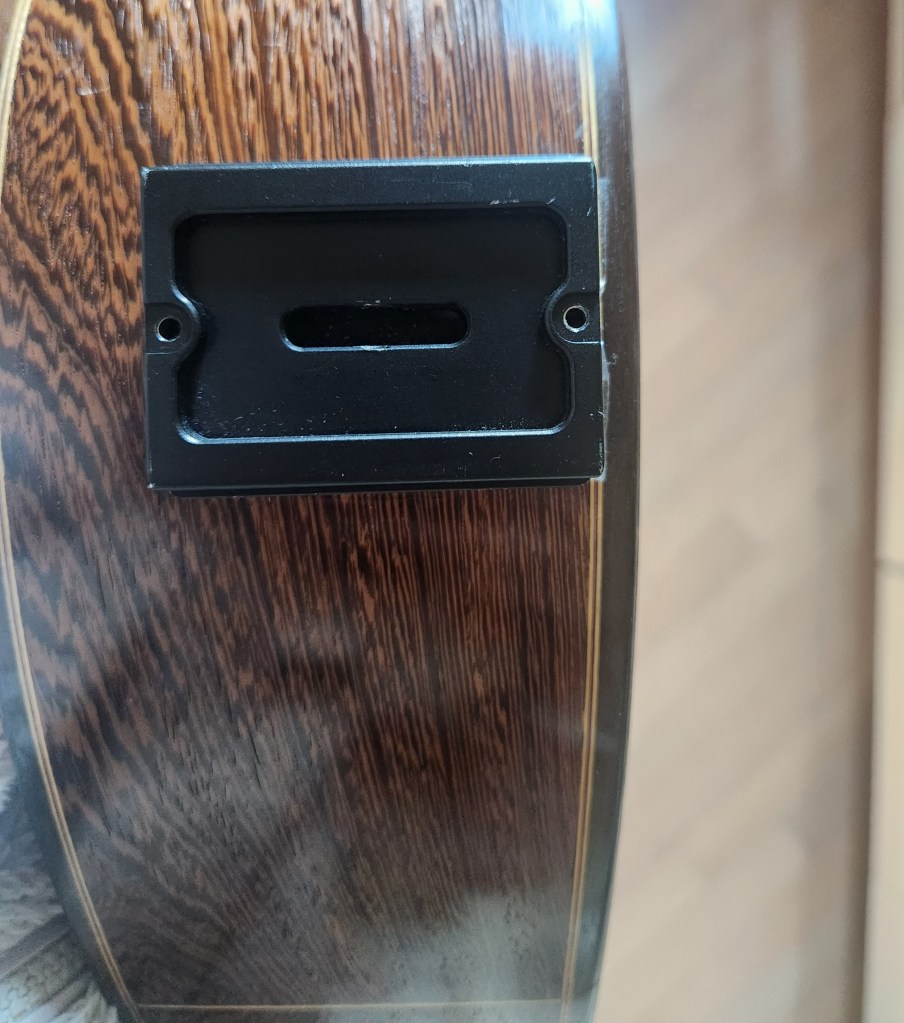
Attach leather to the plate so that it conforms to the curvature of the guitar body. This protects the guitar surface and eliminates gaps.
VHB double-sided tape is sufficient for attaching the leather to the plate. I also used leather adhesive that I already had.
(3) Attaching the plate to the guitar body
Apply nano tape to the plate that has been shaped to fit the curvature.
It is better to apply the nano tape slightly larger than the plate. This makes removal easier later by pulling the excess tape.
Attach the plate with nano tape to the previously determined position.
(4) Attaching the ball head and monopod
Attach the ball head and monopod to the plate.
At the end of the monopod, attach a freely movable foot pad. There are various types available.
I use a lighter one for portable use, and a heavier one for stationary use. A tripod base can also be used, but it feels excessive for my needs.
(5) Adjusting posture with the monopod and ball head
While holding the guitar, adjust and fix the height of the monopod.
Set the neck angle appropriately, then lock the ball head.
(6) Play
(Additional) How to remove the plate
Pull the excess nano tape extending beyond the plate horizontally to stretch it. As it stretches, the adhesive weakens (refer to the nano tape instructions).
While slowly stretching the tape to reduce adhesion, apply slight force to the monopod attached to the plate. Using leverage, the plate can be removed easily.
My guitar has a shellac finish, and I did not notice damage during removal. However, since finishes vary, caution is advised.
Do not attempt to remove the plate with excessive force without first weakening the nano tape. Also, if no soft material (like leather) is attached between the plate and guitar, surface damage may occur.
Advantages
(1) Simple structure and flexible setup
The system is simple and customizable.
If portability is important, you can use a lighter ball head with less holding power. If stability is more important, use a heavier, stronger ball head.
There are various monopod feet available, and you can swap them depending on the floor surface.
It is also possible to use a spike like a cello endpin, along with endpin stoppers.
Since you only need to carry the monopod and ball head, portability is excellent.
Even for traditional posture, this method has advantages. Instead of using a footstool to raise the neck angle, you can simply extend the monopod.
(2) Reduced physical strain and greater freedom
Sitting still for long periods is not good for health.
Using a footstool fixes the leg, which restricts upper body movement and makes playing more difficult.
Supports allow more movement, but still impose some limitations since they rest on the leg.
With a monopod, you can move much more freely while holding the guitar. The weight of the guitar is also less noticeable since it is supported by the monopod and ball head.
You can even lean back against a chair while practicing, or gently move your body to relieve stiffness.
You can sit upright without twisting your spine or rotating your torso to the left.
(3) Relatively low cost
The components—tape, monopod, ball head, plate, and foot—are not very expensive.
While not always cheap, it is generally affordable.
Disadvantages
(1) Plate repositioning is not easy
Since it uses adhesive, adjusting the position after attachment is not very convenient.
A better method would be desirable, but I haven’t found one yet.
(2) Additional weight on the guitar
This is a common issue with many supports.
In theory, it may affect the sound. Based on simple measurements, the tonal characteristics do not change significantly (e.g., in terms of monopole behavior).
However, there may be a slight reduction in potential volume, though it is not very noticeable.
(3) Too much freedom may feel unstable
The extended monopod may feel cumbersome, and the freedom of movement can sometimes feel less stable.
Other Methods
(1) Traditional posture
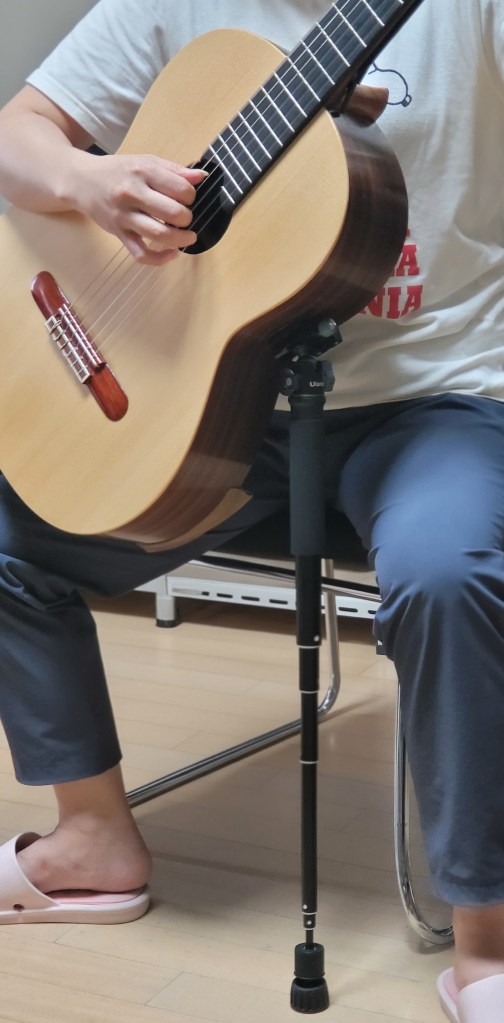
Using a guitar support means you don’t necessarily have to stick to traditional posture.
However, if the plate is attached to the waist area of the guitar, traditional posture is still possible.
In this case, even a weaker ball head can work reasonably well, since part of the guitar’s weight and the right arm are supported by the right leg.
(2) (Quasi) Paul Galbraith posture
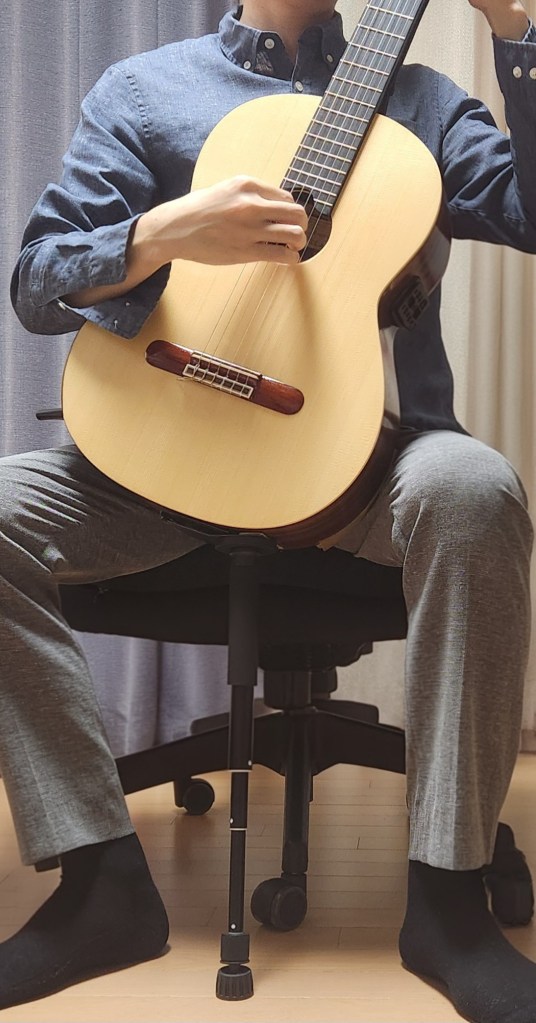
You can use the same method above, or simplify it by eliminating the plate and ball head.
Instead of attaching a plate, attach a metal plate that magnets can stick to.
Use a monopod and foot as before, but attach a round rubber plate with a built-in neodymium magnet (compatible with the monopod screw, typically 1/4 inch) to the monopod, and connect it to the metal plate on the guitar.
To detach, simply tilt it in one direction.
(3) Reinforcing a GuitarLift-style support
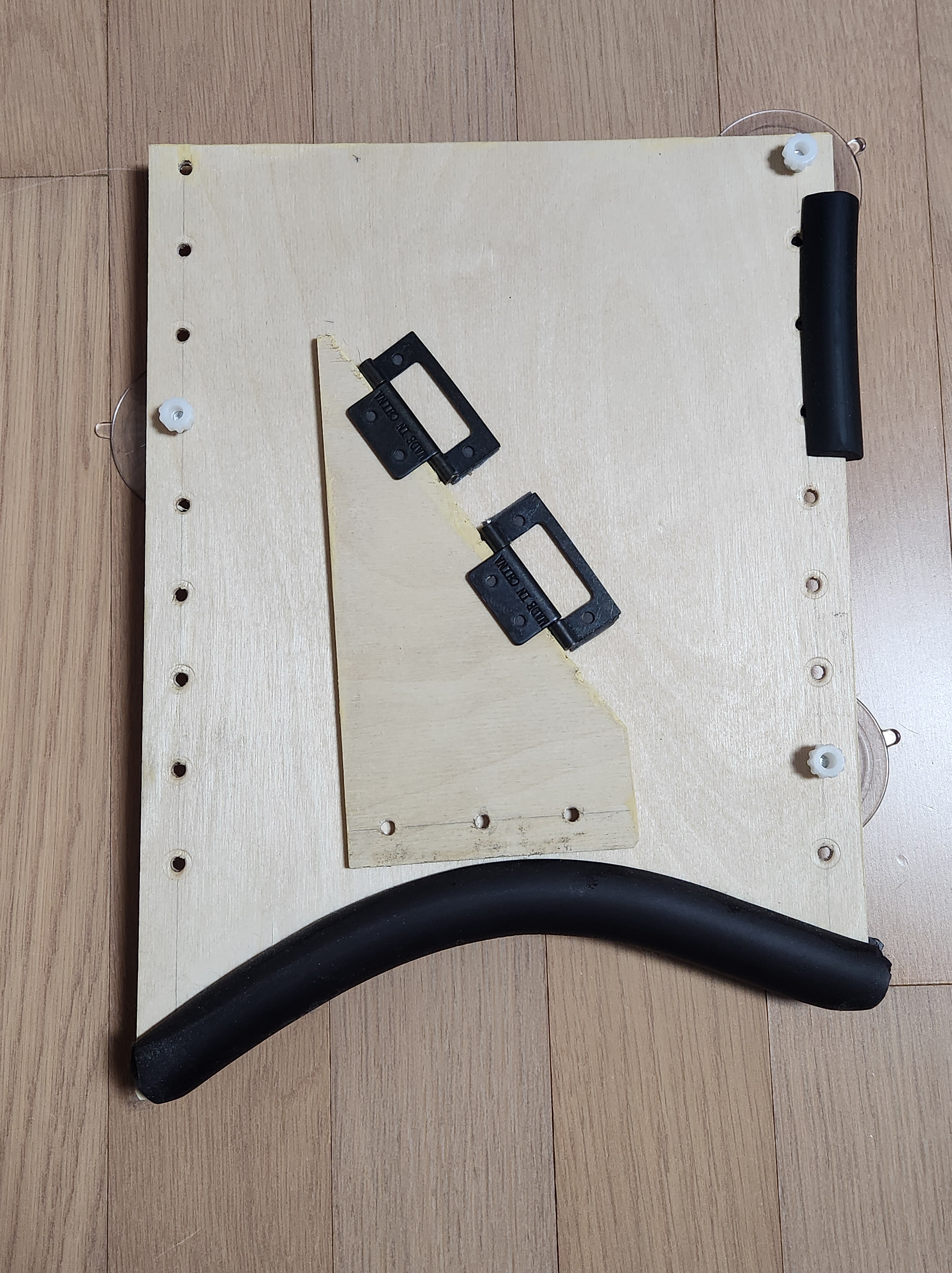
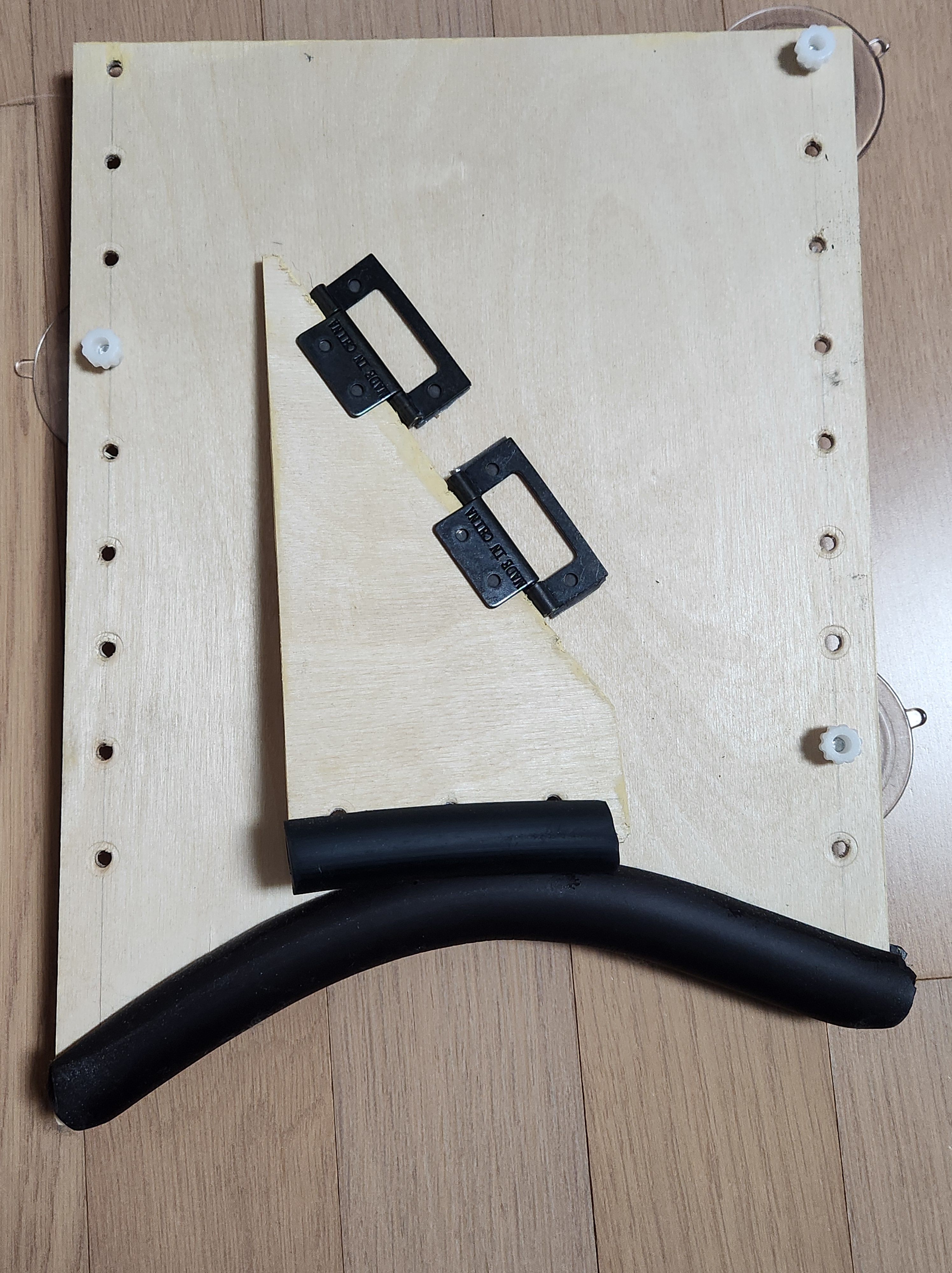
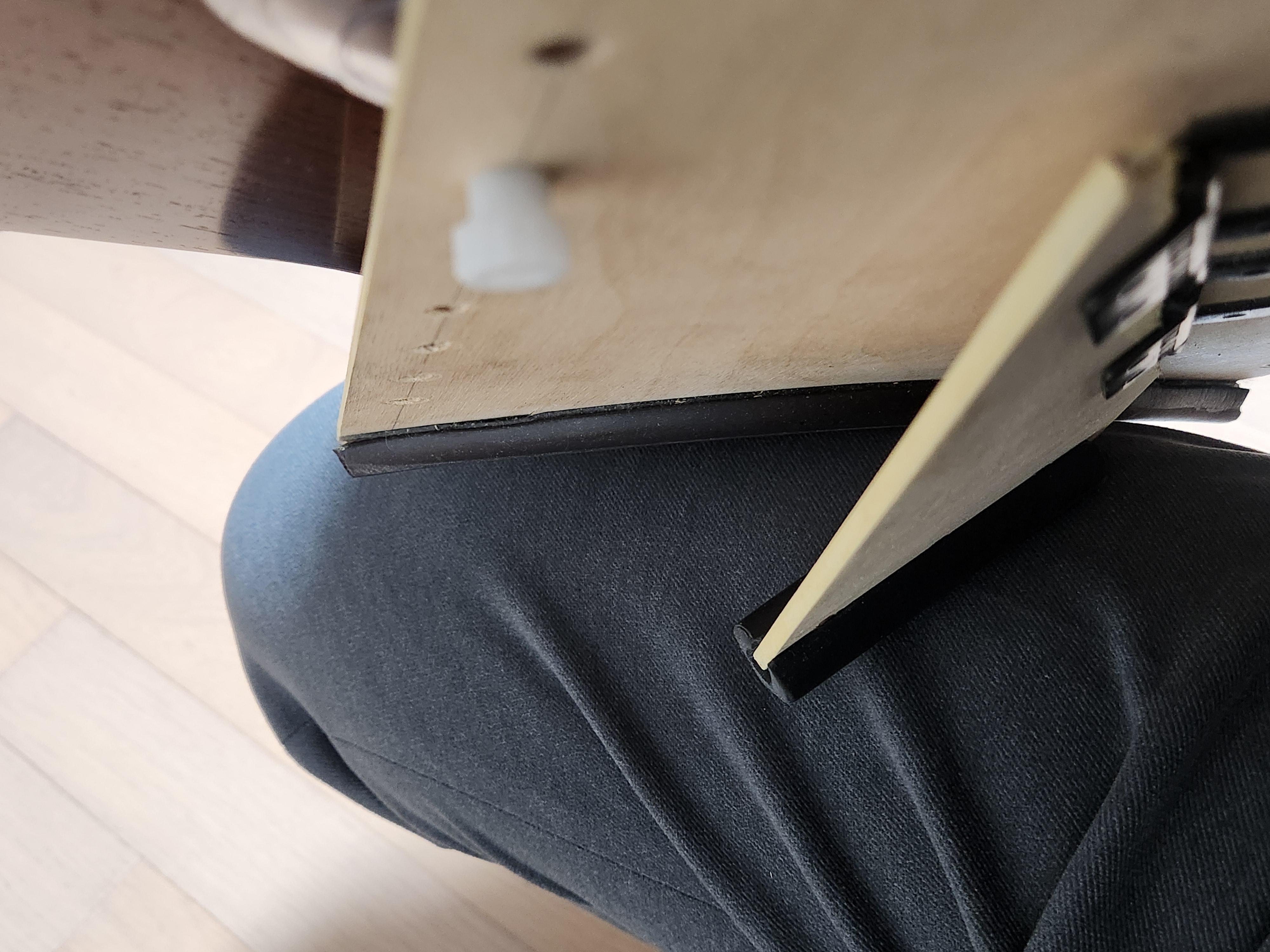
If you use a GuitarLift-style support but want to play on your right leg or improve stability, you can add an auxiliary plate.
Materials needed: two small butterfly hinges, plywood or acrylic board, and sponge or rubber for the contact area.
VHB tape is sufficient for attachment.
It is also recommended to attach a piece of fabric between the main plate and auxiliary plate to prevent excessive opening.
<End>
 변호사 마정권 법률사무소